What Causes Bad Breath? A Guide to the Common Sources
We may earn a commission when you buy through links on this page, at no extra cost to you. Learn more
Most bad breath starts in the mouth. Bacteria on the tongue, teeth and gums release smelly sulfur gases. Dry mouth, strong foods, smoking, gum disease and cavities make it worse. Less often, a sinus, throat or body-wide condition is behind it. A quick quiz below helps you spot your likely cause.
ProDentim: A chewable probiotic supplement marketed for teeth, gums, and oral bacterial balance.
Visit the official ProDentim site60-day money-back guarantee

On this page
- What actually makes breath smell bad?
- Is it my mouth? Hygiene, tongue coating, gum disease and cavities
- Could dry mouth be the reason? Morning breath and medications
- Do food, coffee and smoking cause it?
- When is bad breath coming from the throat, nose or body?
- Quiz: what is most likely causing your bad breath?
- Do mouthwash, mints and probiotics help?
- How does this fit with oral probiotics?
What actually makes breath smell bad?
Bad breath (halitosis) is mostly caused by bacteria in the mouth that release smelly sulfur gases. They feed on proteins from food and dead cells, mainly at the back of the tongue.
The gases have names. Hydrogen sulfide smells like rotten eggs. Methyl mercaptan is more cabbage-like. Dimethyl sulfide adds a sweetish, sulfur note. A narrative review of halitosis says the tongue’s bumpy surface holds large amounts of these bacteria.
Picture a damp sponge left in a warm spot. It starts to smell fast. A coated tongue works much the same way.
How common is a mouth source? A systematic review reports that 80 to 90 percent of cases come from inside the mouth. The other 10 to 20 percent are extra-oral halitosis. That means odor that starts outside the mouth, such as in the sinuses or body, and is carried out in the breath.
Is it my mouth? Hygiene, tongue coating, gum disease and cavities
Yes, in most cases. The same review names a coated tongue, gum disease and poor oral hygiene as the main causes.
Plaque and tongue coating
Tongue coating is the most common single source. Plaque and leftover food between teeth feed the same bacteria. Brushing twice a day, flossing daily and cleaning your tongue all cut down their food supply. In one 2019 trial, people who used a tongue scraper had lower odor readings than people who used mouthwash.
Quick tip: Start at the back of your tongue and pull forward with light pressure. Rinse the scraper after each pass. Our guide on how to clean your tongue has the steps.
Gum disease and tooth decay
Gum disease and untreated cavities can cause bad breath because they create pockets where bacteria hide. Brushing can’t reach them. Johns Hopkins Medicine lists bad-smelling breath and a bad taste as a main sign of gum disease and says it needs a dental provider’s care.
Dentures and food traps
Dentures that aren’t cleaned well can hold bacteria, fungi and food bits, according to the same source. Braces and large cavities trap food too. Clean dentures daily, and ask your dentist about any spot where food keeps catching.
Could dry mouth be the reason? Morning breath and medications
Dry mouth is a common cause of bad breath, because saliva rinses away bacteria and food. Less saliva means more odor.
Why morning breath happens
Saliva drops while you sleep. Bacteria then break down leftover food with little to wash them away. That’s morning breath, and it usually eases after brushing, tongue cleaning and breakfast.
Medications that cause dry mouth
Many common medicines dry the mouth, including some antihistamines, antidepressants and blood pressure drugs. Don’t stop a prescription on your own. Ask your doctor or pharmacist if an alternative exists.
Mouth breathing, dehydration, alcohol
Mouth breathing, snoring, dehydration and alcohol also dry things out. Alcohol-based mouthwash can add to it. Johns Hopkins suggests crunchy foods like apples and carrots, and sugar-free gum, to keep saliva moving. A dentist can suggest artificial saliva if needed.
Do food, coffee and smoking cause it?
Yes. Garlic, onions, coffee, alcohol and smoking all affect breath, and brushing only partly fixes some of them.
Garlic and onions are absorbed into the blood and breathed out through the lungs until they clear, per Johns Hopkins. Coffee and alcohol dry the mouth. Very low-carb diets and fasting can also bring a distinct odor.
Smoking and vaping leave their own smell. Studies have linked smoking to higher risk and severity of halitosis. Tobacco also raises the chance of gum disease.
What vitamin are you lacking if you have bad breath?
No single vitamin shortage is a proven common cause. Overall diet, hydration and mouth care matter more. If you think something is missing from your diet, a doctor can check.
When is bad breath coming from the throat, nose or body?
Sometimes. Sinus, throat and body-wide conditions cause roughly 10 to 20 percent of cases, according to the systematic review.

Sinus, throat and tonsils
Sinus infections, postnasal drip and tonsil stones can add odor. MedlinePlus notes that sinusitis or nose problems may be to blame.
Illnesses linked to bad breath
Diabetes, liver disease and kidney disease have been linked to halitosis. Acid reflux (GERD) may play a part too. A fruity or acetone smell, or an ammonia-like one, is a reason to see a doctor.
Is bad breath a sign of COVID?
Bad breath isn’t a defining COVID symptom. Dry mouth and taste changes can happen, which may make breath seem off. If you have fever or other symptoms, follow current health guidance and talk to a doctor.
Quiz: what is most likely causing your bad breath?
A short quiz can point you to the likeliest cause and your next step. It isn’t a diagnosis.
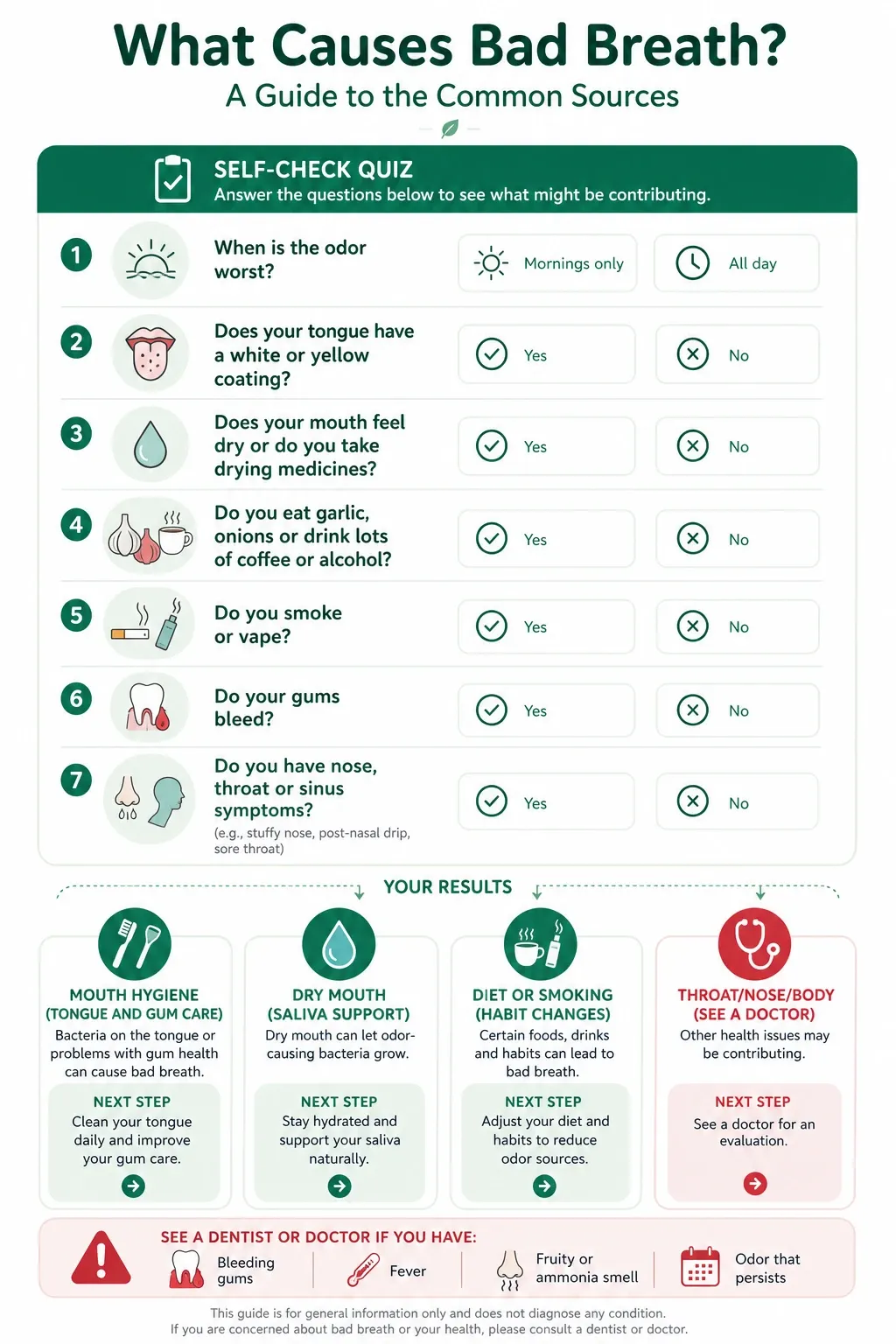
Can you smell your own breath? Not reliably. Try licking your wrist and sniffing once it dries, or smelling used floss. Or ask someone you trust.
See a dentist if odor lasts despite good care, or if your gums bleed. See a doctor for fever, a fruity or ammonia smell, or ongoing sinus symptoms.
Visit the official ProDentim site60-day money-back guarantee
Do mouthwash, mints and probiotics help?
Mouthwash and mints give short relief, while probiotics are early and mixed. Neither replaces fixing the source.
Why mouthwash and mints only mask
They cover odor for a short time. The bacteria and coating stay put, so the smell returns.
Do oral probiotics help halitosis?
Possibly, as a add-on. A 2025 review of six trials with 360 people found lower sulfur gas levels, but the studies differed and follow-up was short. ProDentim is a chewable probiotic. The maker says it supports oral bacterial balance, and the maker hasn’t published a study of ProDentim itself. See our oral probiotics guide.
How fast can you get rid of it?
Food odor fades in hours. Hygiene-based odor can ease in hours to days. Gum disease or decay needs dental treatment.
How does this fit with oral probiotics?
Probiotics are one small piece of the picture. Finding your cause comes first. For a step-by-step plan, read persistent bad breath: steps and when to get help. If brushing isn’t solving it, see why your breath still smells after brushing. For the full research picture, start with oral probiotics: what they are and what the evidence shows.
Frequently asked questions
Can stress cause bad breath?
Stress may play a role indirectly. It can dry the mouth and change habits like brushing or drinking water. Some small studies have linked perceived stress with self-reported bad breath. If it persists, check your mouth care and talk to a dentist.
Can tonsil stones cause bad breath?
Yes, they can. Tonsil stones are small lumps of debris and bacteria that collect in the folds of the tonsils and give off sulfur odors. Gargling and good tongue care may help. If they keep returning, ask a dentist or doctor.
How often should I clean my tongue?
Once a day is a sensible habit, usually when you brush your teeth. Start at the back and pull forward gently, rinsing the scraper between passes. If your tongue feels sore or bleeds, ease off and ask your dentist.