How to Scrape Your Tongue Properly: A Step-by-Step Routine
We may earn a commission when you buy through links on this page, at no extra cost to you. Learn more
To scrape your tongue, rinse the scraper, place it near the back, pull forward with light pressure, rinse, and repeat 3 to 5 times once a day, ideally before eating. It can lower the coating that feeds odor bacteria, but the coating returns, so keep brushing and flossing.
ProDentim: A chewable probiotic supplement marketed for teeth, gums, and oral bacterial balance.
Visit the official ProDentim site60-day money-back guarantee

On this page
- How do you scrape your tongue step by step?
- How do you clean the back of your tongue without gagging?
- Tongue scraper or toothbrush: which should you use?
- Does cleaning your tongue actually make your breath smell good?
- Why is your tongue still dirty after cleaning?
- How often should you scrape, and how do you care for the scraper?
- When does a coated tongue or bad breath need a dentist?
- What next if tongue scraping isn’t enough?
How do you scrape your tongue step by step?
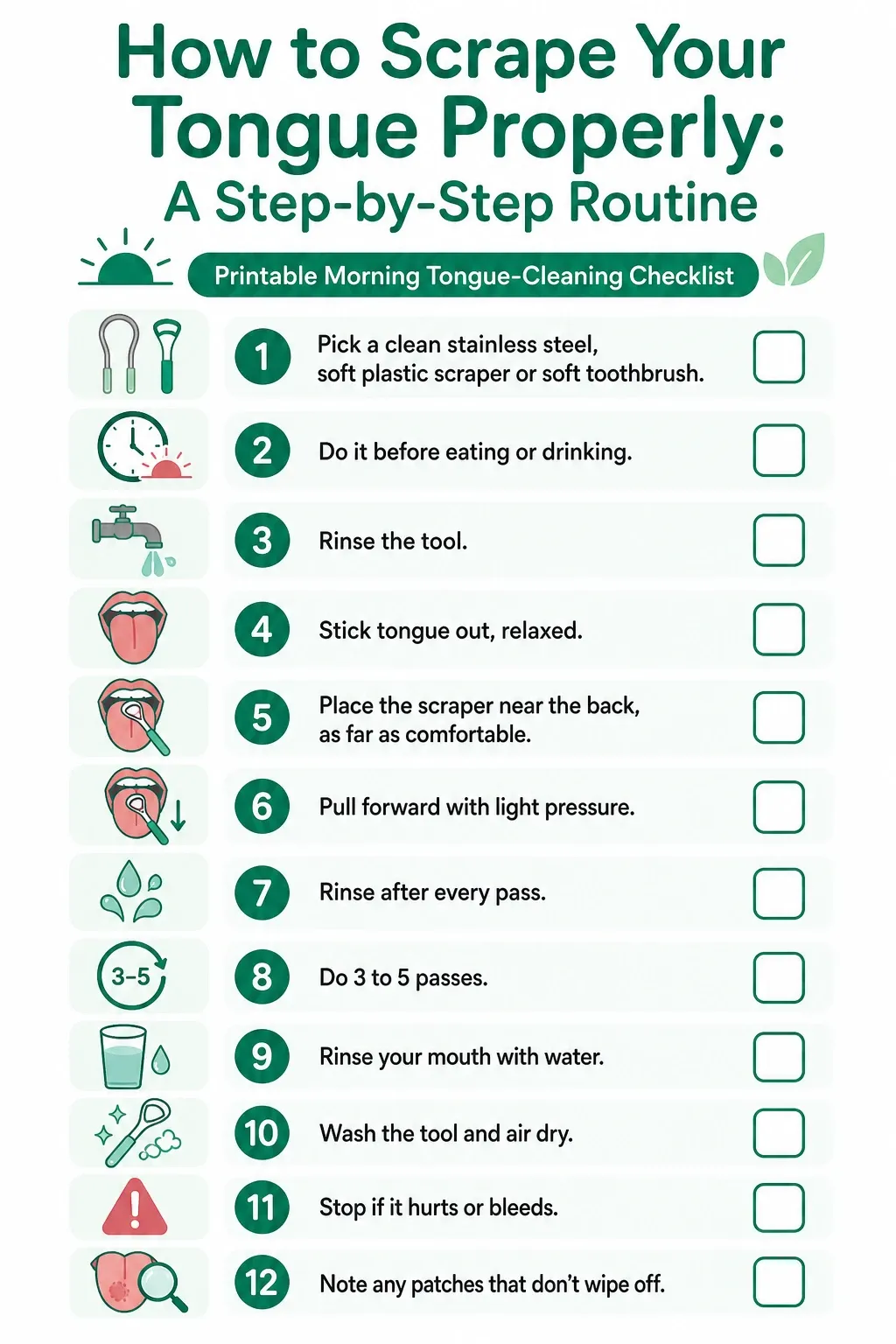
To scrape your tongue, pull a clean scraper from the back of your tongue forward, gently, 3 to 5 times, and rinse the tool after each pass. Here’s the full routine.
Step 1: Pick a scraper or a soft brush
A stainless steel or soft plastic scraper, or a soft toothbrush, will do the job. The Harvard Health Q&A notes scrapers come in stainless steel, silicone or plastic, and that a spoon can work too. Rinse the tool first.
Step 2: Scrape from back to front with light pressure
Back to front moves the coating out of your mouth instead of pushing it deeper. Stick your tongue out, relaxed. Place the scraper near the back, as far as is comfortable, and pull forward. The ADA’s MouthHealthy page describes the same direction. Light pressure is enough. Your tongue shouldn’t hurt or bleed.
Step 3: Rinse, repeat and finish
Rinse the tool after every pass, and do 3 to 5 passes. Expect a thin white or clear film on the scraper at first. Then rinse your mouth with water.
How do you clean the back of your tongue without gagging?
To clean the back of your tongue without gagging, start further forward and move back a little more each day. This part matters because a review of halitosis points to bacterial overgrowth on the back third of the tongue as a common source of mouth odor.
- Breathe slowly through your nose.
- Go slowly, and stop just short of the gag point.
- Try it before you eat, not after.
- Give it a few days. The reflex usually settles with practice.
Consistency beats depth. A shallow pass every morning is better than one deep, miserable try.
Tongue scraper or toothbrush: which should you use?
A tongue scraper is usually the better first pick, but a soft toothbrush works if you prefer it. Both are fine, and either beats skipping the tongue if you like the clean feeling.
| Tool | How it works | Comfort | Cost | Gag risk | Best for |
|---|---|---|---|---|---|
| Stainless steel scraper | Pulls coating off in a thin sheet | Firm, smooth | Low | Moderate | Thicker coating |
| Soft plastic scraper | Same, with more flex | Gentle | Low | Moderate | Sensitive tongues |
| Soft toothbrush | Bristles lift coating | Familiar | Already owned | Often higher | Convenience |
Scraper pros and cons
A scraper reaches far back and clears a lot per pass. In one small trial, scrapers and tongue cleaners cut sulfur compound levels slightly more than a toothbrush. Press too hard and you can scratch your tongue.
Toothbrush pros and cons
A toothbrush is already in your bathroom. A Cochrane review of two small trials found the toothbrush caused more nausea than the scraper. Toothpaste on the tongue is optional.
Do dentists recommend brushing the tongue?
Many dental sources include tongue cleaning in routine care. A halitosis review lists it in management. The ADA says there’s no evidence it prevents chronic bad breath, and calls it optional.
Does cleaning your tongue actually make your breath smell good?
Cleaning your tongue can freshen breath for a while, but the evidence is weak and the effect is short. Bacteria on the tongue break down protein into smelly gases called volatile sulfur compounds (VSCs), including hydrogen sulfide. Less coating means less fuel.
In one trial, scraping lowered VSC levels, but not for more than 30 minutes. A large Cochrane review of halitosis treatments called the evidence on tongue cleaning very uncertain. Some researchers also wonder about effects on the oral microbiome (the community of mouth bacteria), which is one more reason to stay gentle.
So expect fresher breath for some hours, not a permanent fix.
Why is your tongue still dirty after cleaning?
Your tongue still looks coated because the coating regrows, often overnight. Food debris and bacteria settle between the tiny bumps on your tongue called papillae. The ADA notes that bad breath bacteria can grow back as fast as you remove them.

Dry mouth speeds this up, which is why morning breath is worst. Saliva helps rinse the tongue. Helpers that need no tool: drink water, eat breakfast, and chew sugar-free gum.
Common mistakes:
- Scraping too hard
- Skipping the back
- Never rinsing the tool
- Scraping after eating instead of before
- Treating it as a swap for brushing and flossing
A white coat that wipes off is usually normal. Patches that don’t wipe off may be something else.
Some people add an oral probiotic on top of cleaning. ProDentim is a chewable one, and the maker says it supports oral bacterial balance. It doesn’t replace scraping, and the maker hasn’t published a study of ProDentim itself.
How often should you scrape, and how do you care for the scraper?
Scrape once a day, in the morning, and twice at most. Wash the tool with soap or toothbrush and warm water, then air dry it. Replace plastic ones when they wear or bend.
Keep the rest of your routine too: brush twice a day, floss daily, and use an alcohol-free mouthwash if you like. A review lists plaque control and tongue cleaning together in managing halitosis, with mouthwash as a temporary measure.
One small trial of a mouth-friendly bacteria tablet suggests the coating may need to be removed first for such products to help. Cleaning comes first.
When does a coated tongue or bad breath need a dentist?
See a dentist if bad breath lasts after two weeks of a steady routine. Also go if your gums bleed or feel sore, which can point to gum disease.
Signs that aren’t simple coating:
- Thick white patches that scrape off painfully, which can mean a yeast overgrowth called Candida (oral thrush)
- Red or sore areas
- Patches that stay
Other causes include tonsil stones, sinus problems, dry mouth, reflux and some health conditions, so a doctor may be needed. Most halitosis starts in the mouth, but not all.
If it persists: book a dental check, review your medicines with a doctor, keep hydrated, and note when it’s worst.
What next if tongue scraping isn’t enough?
If scraping hasn’t solved it, the cause may lie elsewhere. Our guide to persistent bad breath and when to get help lays out the next steps. See what are the causes of bad breath to narrow it down, and oral probiotics for what that research covers.
Check the current ProDentim offer on the official site if you’re curious about the chewable option.
Visit the official ProDentim site60-day money-back guarantee
Frequently asked questions
Can I use a spoon to scrape my tongue?
Yes, a clean spoon can work in a pinch. Harvard Health mentions it as an option. Use the back of the bowl edge gently, pull from back to front, and rinse after each pass. A purpose-made scraper is usually smoother and easier to control.
Should I scrape before or after brushing my teeth?
Either order is fine, and no rule says otherwise. Many people scrape first thing in the morning before eating, then brush. What matters is doing it gently and regularly, plus rinsing the tool after every pass.
Is a white tongue always a sign of a problem?
No. A thin white coating that wipes off is common and usually harmless. See a dentist if white patches won’t wipe off, hurt when scraped, look red underneath, or last more than a couple of weeks.